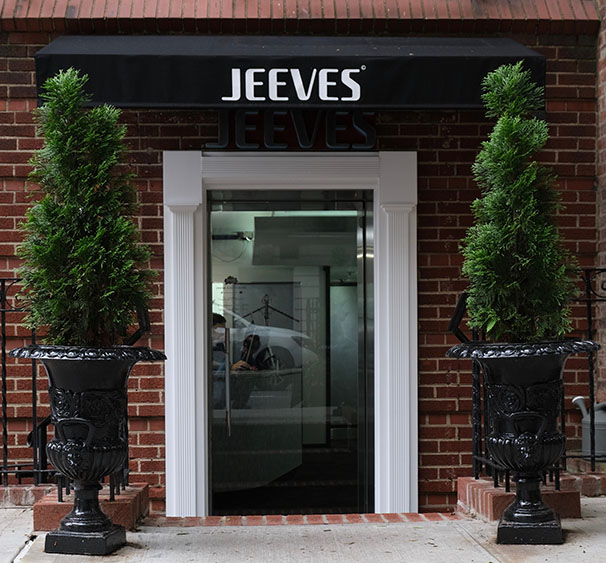
The Dry Cleaner

Underarm

sweat“Genius is 1% inspiration and 99% perspiration”, Thomas Edison.

“Hard work shouldn’t ruin your clothes.”, Jerry Pozniak.

Yellowing underarms are problematic at best. Caused by a chemical reaction between body salts and aluminum in antiperspirants; underarms may yellow, a by-product of your toil.

Crisp white shows off yellow best. If you can call it that.

Washed at home, many reach for the chlorine bleach but this only makes the yellowing more intense (almost a frightening orange in some cases).

Pretreatment with the correct product will solve your yellow issue. Use a detergent that contains enzymes (look for “removes grass stains” on the label) or an oxy-clean product. Wash in hot water.*

This treatment is only for washable garments. If “dry clean only” put into the hands of a professional.

Changing your deodorant may solve the issue “once and for all” without the hassle of washing, soaking and chapped hands.

At my shops our professional products make haste of yellow underarms; including the most delicate of silks and the softest cashmeres.

Underarms yellow? I can help. My shops specialize in stain removal extraordinaire. Bring me your toughest and your yellowest. If we can’t fix them, you don’t pay. All of my work comes with a “Satisfaction Guarantee”.

In NYC we are Jeeves of Belgravia and Cameo Cleaners of Gramercy Park. On Long Island, Arthur Copeland Cleansers.

Thanks for listening.

*Hydrogen Peroxide applied directly to the yellow area will also work in extreme cases. Always TEST a small unexposed area first (that’s what the pros do), peroxide may not be safe on colors.

White

man-white-shirt“Pure as the driven snow.”

“So white it almost glows.”

Owning white in your wardrobe can sometimes be a challenge. White does not hide stains and sometimes does not stay that way forever.

In nature the thread given from the silk worm is not florescent nor is the off-white cotton puff which becomes a crisp cotton top.

Garment makers coax, tease and eventually dye these fibers to become brilliantly white.  Dye, just like the indigo which makes blue jeans blue is used to make off white fibers white.

At the counter clients holding garments cleaned by lesser dry cleaning shops all complain of whites that are now gray. But how?

Other cleaners don’t keep their cleaning solution clean, it is reused until it as dark as a Cuba Libre. Imagine taking a bath in water that ten people have used before you. It’s an easy way to save money.

There is a reason why better quality dry cleaning costs more, your whites should stay, well, white.

Over time as your white garment reaches middle-age, you may notice that the brilliance has faded. The natural break down of the dyes used to make white, brilliant white is starting to occur.

Your white garment is just trying to go back to how it started, not brilliant any more, but older and maybe just a bit wiser. Like the person who wears it so well.

If your whites are coming back from your cleaner less than white, bring them to me. I will be able to help.

My shops are Jeeves of Belgravia and Cameo Cleaners in NYC and Arthur Copeland on LI.

Thanks for listening.

Naked

clothing-on-hanger“Paper or plastic?” That used to be the question at the market, now the sign admonishes you to bring your own bag. Great idea.

In France, so I am told, you are scowled upon if you don’t come to the market with your own.

Clean and freshly pressed clothes are covered in plastic for their journey from my shops to your home. The plastic is a barrier against the perils of stains and wrinkles during transport.

When asked, I always mention that clothes should never be stored in plastic. Fabric needs to breathe; plastic traps moisture and off-gases chemicals harmful to fabric.*

Naked. Your clothes look great naked. Plastic does nothing for the beauty of your wardrobe.

Buy how? Is it risky not to protect? Bring your own bag? The one from Whole Foods won’t do.

A reusable garment bag of your very own, and it is made of cloth.

Drop your bag off with your clothes and we will use it for the journey home. Your clothes can breathe and the landfills will rejoice.

Cost? About $10, but consider the benefits. For most of your wardrobe it can work. For the fussy, special pieces plastic may still have to do. At least for now.

Questions? Drop me a line. Jerry@CameoCleaners.com

Thanks for listening.

The reusable garment bags can be purchased at:

Cameo Cleaners of Gramercy Park, 284 Third Avenue, NYC 212-677-3949

Arthur Copeland Cleansers, 140 Grove Avenue, Cedarhurst, NY 516-295-2198

*Garment stored in plastic have a tendency to fade due to atmospheric gases being trapped in the plastic bag. You may notice garments in your closet that the color has lightened across the shoulder areas, this is called “fume” fading.

*Mold and mildew damage is problematic with garments stored in plastic. Trapped moisture can cause mold to grow. Only store your clothes naked or in cloth garment bags.

Yellow


smc_target_au_0012Like the “Invisible Man” some stains do start off invisible. When those words leave my lips at the front counter of my shops I have to consider what the client is thinking.

“Is this guy for real”, must go through my client’s heads. It sounds like a bad pick-up line. It is lonely at the front of Cameo Cleaners of Gramercy Park.

That big yellow stain, right there in the front of your blouse, the one that wasn’t there when you dropped your blouse off, yep, that is an invisible stain. Stuff like this makes you feel that you were “taken-to-the-cleaners”. (Does anyone know where that saying came from?)

Invisible stains do exist, they are real and they were not invented for the pleasure of your local dry cleaner. They are stains which oxidize, like when you bite an apple and 10 minutes later it is turns brown.

If you get a splash of white wine on your blouse or even a light sauce, the stain may not be visible when you take your blouse off.

Over time, especially when you put your clothes away for the season, these “invisible” stains will oxidize and turn yellow.

Sometimes the heat used in the dry cleaning process will accelerate the process though a great dry cleaner should be able to remove the yellowing if the oxidization isn’t too bad.

Your best bet is to never put away clothes for the season that have been worn. Always clean before you store and watch out for those “invisible stains”.

Thanks for listening.

Moth

imagesThe moths in question may not kill, may not maim but will inflict harm. Harm not to you, but harm to your possessions.

Moths, and not the kind that flutter towards the light harmlessly, but a different variety that hops along in darkness laying her eggs.

These eggs lay dormant amongst the folds of the softest cashmere, hidden from view in warmth and darkness.

The larvae appear not all at once but over time. As they hatch they are awakened from their slumber by the uncontrollable urge of hunger.

And so they feast. Drawn to the musky aroma of late nights at the office (working of course) along with a splash of white wine from dinner they start.

They don’t stop their feast until disturbed by the harsh light of day or eradicated by immersion into cleaning solutions. But by then it is too late.

The evidence of the feast has left the softest cashmere pock marked with irregular holes, fibers weakened. The piece would never be the same.

Fixable of course, invisible weaving by the finest French method will un-do the damage. But at a hefty price.

Insurance you mutter. The only insurance is to only put away one’s precious woolens clean. And yes, you must clean if only worn once, as just one drop could start the feast.


*The moths in question are; the webbing clothes moth or the casemaking clothes moth.

*Re-weaving starts at $100 and the price quickly increases depending of the number of holes. Cameo Cleaners of Gramercy Park, Arthur Copeland Cleansers and Jeeves of Belgravia (NYC) all have wonderful weaving divisions.

*Dry cleaning your woolens before storage is the best insurance against moth damage.

The Dry Cleaner